


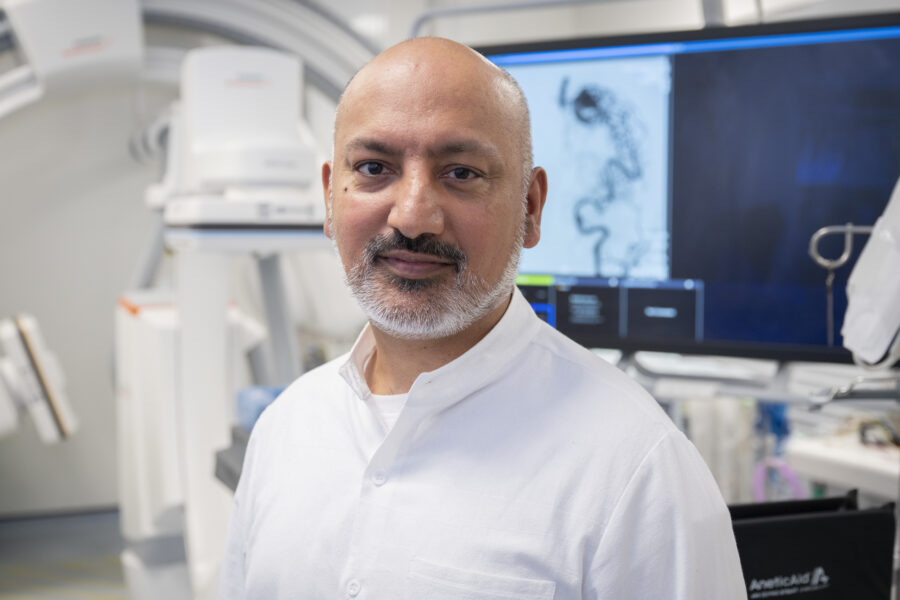
Zehair Ayub from Bradford is the first person in the UK to be treated with a new material for an arteriovenous malformation (AVM) deep in his brain. For years his AVM was considered untreatable. Today it is closed.
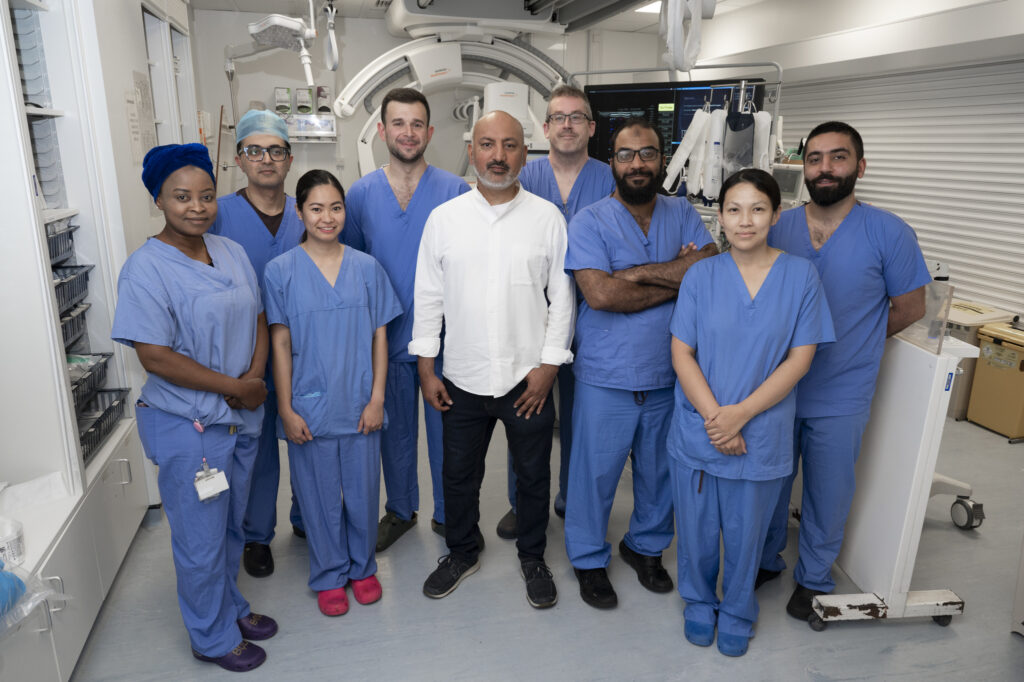
For fifteen years, Zehair tried every treatment that seemed possible, without success. That changed when he met Dr Fathallah Islim, a consultant at Leeds Teaching Hospitals. Dr Islim had trained at a centre in Germany that took part in the European study of the new treatment.
In an AVM, arteries and veins are joined directly to each other in an abnormal tangle. This disturbs the normal blood flow and makes the vessels fragile. They can burst and cause dangerous bleeding.
Zehair’s AVM lay deep inside his brain, and a large aneurysm (a bulge in a blood vessel) had formed. It pressed on the nerves of his eyes and had already cost him part of his sight. He also lived with a high risk of a brain haemorrhage that could be fatal or change his life for good.
Zehair was diagnosed in 2011. Radiation treatment with the Gamma Knife in Sheffield did not work. The other options he looked into over the following years offered little chance of success, and because the AVM lay so deep, surgery was considered too dangerous.
Meanwhile his symptoms grew worse: epileptic seizures, weakness on the right side of his body and failing eyesight. All that time he knew a major bleed could happen at any moment.
The European study was not running in the UK. Dr Islim, a consultant interventional neuroradiologist, therefore obtained special permission to use ihtObtura for Zehair on compassionate grounds.
This is what makes it possible to treat large brain AVMs, long seen as untreatable, safely in several stages.
Before his diagnosis, Zehair was fit and active. He was a keen footballer and cricketer, a regular at the gym, a young father and the owner of his own business. Then he suddenly learned he had a rare condition that could cause a catastrophic bleed. “I just wanted to get back to normal and carry on with my life,” he says.
After fifteen years he was told there were no options left, while his eyesight and coordination kept getting worse. Then he met Dr Islim.
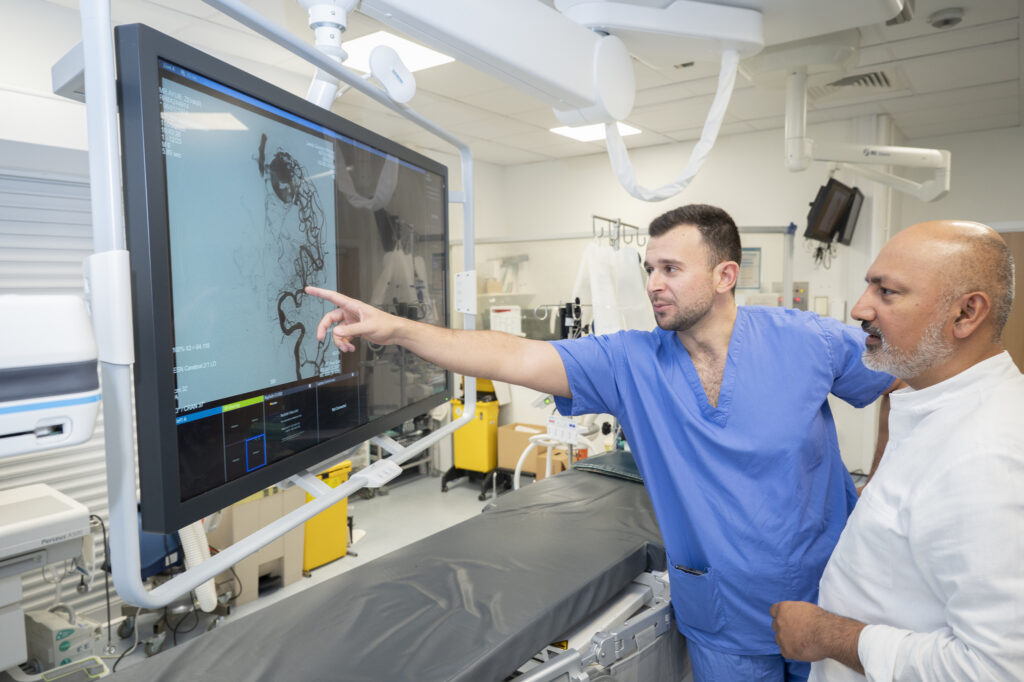
“I knew I was taking a chance on a new treatment, but I had complete confidence in the team.”
Knowing that specialists from Leeds, Germany and Spain were working together gave him extra reassurance.
Treatment through the blood vessels is usually only considered for AVMs that cannot be treated in any other way, Dr Islim explains, because the risks are high for doctor and patient alike.
“Obtura is a new innovative material that has helped cure Zehair’s AVM and help him get his life back.”
The team now hopes the material will be approved in Europe and the UK, so that more patients can be helped soon.
Zehair is thankful to everyone who was involved.
“Dr Fathallah and the whole team gave me hope when I thought I’d run out of options.”
He is also glad that other patients will benefit from this treatment in the future.
Based on a news release by Leeds Teaching Hospitals NHS Trust