


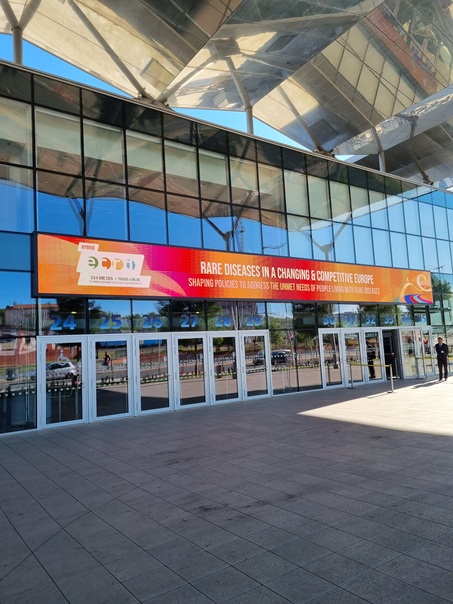
The 13th European Conference on Rare Diseases & Orphan Products (ECRD) took place on 3 and 4 June 2026 in Prague and online, under the theme:
“Rare Diseases in a Changing & Competitive Europe: Shaping Policies to Address the Unmet Needs of People Living with Rare Diseases.”
ECRD is the largest patient-led policy-making event on rare diseases in Europe. The conference brings together people living with rare diseases, patient representatives, policymakers, healthcare professionals, researchers, industry representatives, regulators, and representatives of European Member States to jointly develop policies that improve the quality of life of patients and their families.
Strong International Participation
ECRD 2026 brought together more than 500 participants in person at the O2 universum Congress Centre in Prague, while over 200 additional participants joined online. The hybrid format created an accessible platform for knowledge exchange, collaboration, and the development of new partnerships within the European rare disease community.
Towards a European Blueprint for Rare Diseases
An important objective of ECRD 2026 was to contribute to the collaborative process towards developing a European Blueprint for Rare Diseases. This European plan is intended to be the outcome of broad collaboration among all relevant stakeholders and to ensure:
- Greater shared responsibility across Europe;
- A sustainable approach to rare diseases;
- A stronger European contribution to the WHO Global Action Plan on Rare Diseases.
Key Topics
During ECRD 2026, the main challenges and opportunities shaping the future of rare disease care were discussed. Topics included:
- The development of new treatments and access to therapies;
- Faster and more accurate diagnosis;
- Improving integrated, person-centred care;
- Specialised healthcare;
- Health Technology Assessment (HTA);
- Mental health and the well-being of people living with a rare disease.
Significance for the Future
Participation in ECRD 2026 enabled patient organisations and other stakeholders to actively contribute to shaping the future direction of European rare disease policy. The conference highlighted that collaboration between patients, healthcare professionals, researchers, industry, and policymakers is essential to achieving lasting improvements for the millions of people living with a rare disease in Europe and their families.
Pre-conference – 2 June
In the afternoon of 2 June, six breakout sessions were organised:
- Integrated and person-centred care and social inclusion.
- Research and innovation.
- Access to treatments and medical devices.
- Enabling earlier, faster, and more accurate diagnosis.
- Access to specialised and highly specialised healthcare.
- Data ecosystem.
We participated in Session 1: Integrated and Person-Centred Care and Social Inclusion.
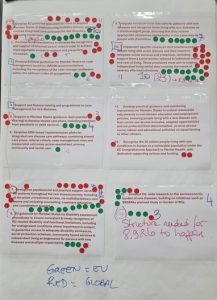
Poster presentatie
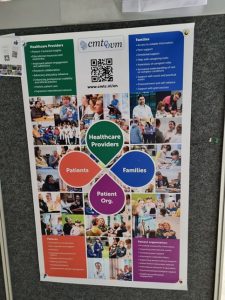
We believe that patient organisations should take a more active role in communicating their added value, particularly to people living with rare diseases, their families, and healthcare professionals.
Several years ago, we developed our Klaverblad Model (Four-Leaf Clover Model). In 2026, we not only published several articles on our website highlighting the added value of patient organisations for these key stakeholders, but also developed a new poster and banner to communicate this message.
At this conference, we presented our poster for the first time.
3 June
The first day began with a plenary welcome session, followed by three parallel sessions:
- Shaping the Future of Rare Disease Therapies.
- Early Detection & Newborn Screening.
- Advancing Holistic Care for Rare Conditions.
We attended the third session, Advancing Holistic Care for Rare Conditions.
After lunch, there was time to view all the posters, followed by another round of three parallel sessions:
- Medical Devices for People Living with a Rare Disease.
- The Journey from Rare Disease Diagnosis to Treatment.
- Filling the Gaps to Provide Evidence-Based Holistic Care.
We attended the first session, Medical Devices for People Living with a Rare Disease.
4 June
The second day began with another series of three parallel sessions:
- Strategies to Improve Access to Specialised Healthcare for People Living with a Rare Disease.
- The State of the Art of the Health Technology Assessment Regulation (HTAR).
- Rethinking Mental Health in Rare Conditions: From Undefined Challenges to Collaborative Solutions.
We attended the third session, Rethinking Mental Health in Rare Conditions: From Undefined Challenges to Collaborative Solutions.
During the lunch break, there was another opportunity to view all the posters and talk to the presenters.
After lunch, there was one final round of parallel sessions:
- Rethinking Access to Specialised Healthcare for People Living with a Rare Disease (PLWRD) – What Should We Measure?
- Preparing Reimbursement Decisions – Practical Consequences for the Future.
We attended the first session, Rethinking Access to Specialised Healthcare for People Living with a Rare Disease – What Should We Measure?
New CEO
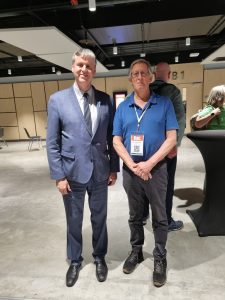
EURORDIS has a new Chief Executive Officer (CEO): Jean Saslawsky.
We wish him every success in his new role!
EURORDIS organises a membership meeting and a major conference every other year.
Management summary