


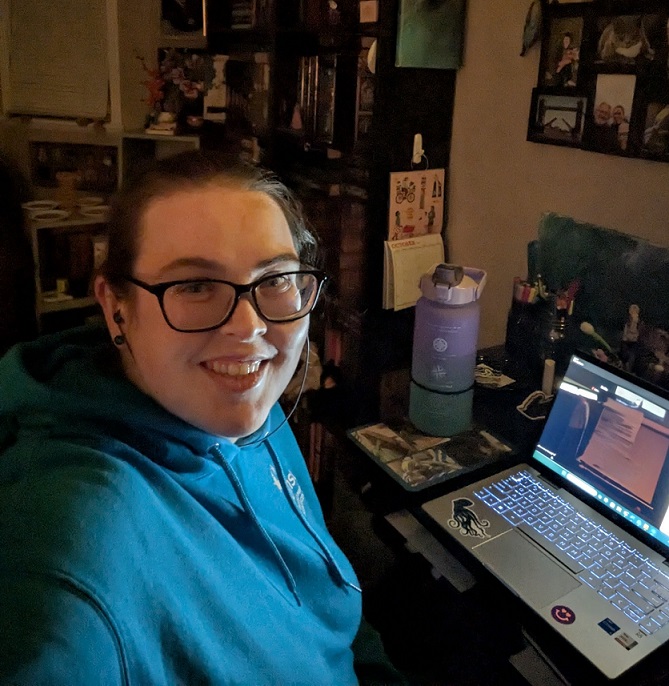
Our Patient Advocate Katie Allen attended the CORD membership meeting on behalf of our organization.
The day started in Ottawa with the Rare Multiverse showcase and the opportunity for in-person members to interact and meet with members of parliament. This was not available to Zoom meeting members, but apparently was very successful. It provided different organizations with an opportunity to share ideas and successes from this year, as well as establish new connections and engage with members of parliament.
After lunch on day 1, Health Canada had the opportunity to provide an update on the national strategy, 2.5 yrs since it was announced. One major success is that all 13 provinces and territories have now finally made agreements with the federal government. An important aspect of this deal, which has been poorly understood so far, is that the Common Set of Drugs List only includes pre-2019 drugs. However, Health Canada assured us that, though the list is limited to the announcement, new drugs can be added. Specifically, provinces and territories can pick up new drugs released since 2019, but that’s why this feels like more of a fight, as there doesn’t seem to be any protocol to do this.
Health Canada assured the conference that it is looking at real-world data to try to fill gaps in rare drugs. Canadian systems are complex, and they acknowledge that though the European models are superior, this complexity is why just porting in European policies doesn’t work in Canada. Negotiations with all provinces and territories are still underway, and as such, specifics cannot be disclosed. Provinces and territories have submitted reports to Health Canada about where they are in this process. The Health Canada website will share the reports on all the provinces and territories’ programs and where they are and are going in the near future. It is important to note that this same promise was made last year and has not happened.
Another major complication to all of this in Canada is that provinces and territories do not seem to be sharing medical data between themselves, so this is fundamentally slowing some of the processes, as the federal government is having to act as a middleman, collecting the data and distributing it. They also need to convert all the different medical data sources into data in a format that all the provinces and territories can use. Overall, it is an overly complicated system that really should not have fourteen governing bodies.
The next presentation was by the Canadian Rare Disease Network, which was focusing on the challenges that exist in getting clinicians to be responsive to the massive spectrum of needs of rare disease patients. What would a model of care look like in Canada, with distance and patients and clinics, and how do you connect them? The reality is we need to celebrate things that are painful and slow, but are still important steps towards making a more universal care system in Canada. As a country, if we cannot do this for rare diseases, then, honestly, as a country, we will struggle with the realities of an aging population and the care required for more common conditions. We, as rare diseases and patients, are the building blocks that common diseases will need to build on to provide universal care across the country. The realities are that we cannot simply look at symptoms for treatments, but what we need are supports as we look for cures or long-term treatments.
RareKids CAN is a pediatric network for rare diseases in Canada. They presented next. It has been a year since it was launched, attempting to link patients with clinical trials across the country. They have supported 16 clinical trials this year, which is a major step up from previous years; however, Canada is still lagging well behind in clinical trials for new drugs. One major reality is that clinics are falling behind because clinicians and companies just don’t have enough patients to make it worth the money and effort. However, it is not necessarily from a lack of patients in Canada, but more that it is too hard for families to get to these clinics, especially for rural patients and families. RareKids CAN is looking to develop a program to help move these families to clinics as needed, but also address the challenges in finding these patients to begin with.
The last presentation of the day was a panel on programs in Canada, where it was discussed that only 74 non-oncology rare disease drugs were reviewed in Canada in the last 5 years; however, 91% of these drugs received positive recommendations. This is a major increase in positive recommendations; in 2018, 70% of drugs received negative recommendations, suggesting the changes written out in the rare disease drug strategy are helping at a bureaucratic level. However, it is still taking 309-627 days to get those positive recommendations for the common list of drugs. Another major success of the common list of drugs is that the province of British Columbia has actually been significantly faster than ever before; it is the first major rare disease success in this province, which is worth celebrating, no matter how small an achievement. We do need to accept that Canada won’t be Germany, where there are many more successes, but we could move to be comparable to the UK’s programs.
Dr. Soleimani from BC Cancer discussed the reality of multisystemic involvement and high complexity that exists in the Canadian system. The challenges surrounding accessing patients, even when you have a drug, include: when to give it to them, and how to get the drug to them. In her clinic, virtual and in-person patients received the same outcomes, highlighting that when done correctly and with a team, virtual care could work in Canada.
The panel concluded two major questions need to be answered to improve patient outcomes in Canada: can we get to a point of a single approver rather than every province’s budgets and disease burden calculation; and how have we not changed drug cost per Quality-of-Life-Year measurement since 2000; house prices have increased by 10-fold, and drugs have changed astronomically; why are we not updating this.
The rest of day one was a series of breakout group discussions that were done very well in the room; however, were not utilized well in the Zoom meeting, where we mostly watched a room of people talking and moving between tables.
Day 2 started with a discussion about day one’s presentations and how the meeting with the members of parliament went the day before.
The first presentation was on the importance of team approaches in rare disease care. Multidisciplinary teams are likely the only true way to care for rare diseases, as most conditions affect far more than one body system. Another major concern and challenge is that in Canada, far less than 50% of rare kids have adult care by specialists after they turn 18. When studied, it was found that only 1/3 of pediatricians even make a referral to an adult doctor for their rare disease patients. This exists for a variety of reasons, but the major challenge is that there are no adult rare disease centres for pediatric centres to refer patients. My case is also a common one; the reality is that there is no adult doctor with expertise on my condition.
Thinkrare gave a quick presentation on using medical records to find complex rare diseases in the data through the use of baby AI scanning records at night and flagging potential patients for doctors. They have presented at previous conferences and have a fascinating program that scans all patient records the night after you are seen and highlights additional tests that should be done or a recommended specialist the patient should see. It is still only used in one pilot project hospital, but it could have major implications for patient care.
A new online psychosocial initiative to support the rare disease community, called Zebracare, is a fee-for-service support system expected to launch in February 2026. It is a psychological service designed for people with rare diseases by people with rare diseases, and will expand rural psychological care into remote areas of Canada.
Then we had a presentation on CORD’s Rare Disease Impact Survey, which was recently analyzed data from Canadian rare disease patients and caregivers. The data found that the cost to the Canadian medical system was that GP visit costs are 2x more for rare disease patients compared to the general population. Whereas specialist costs are approximately 7x more for rare disease patients than for the general population, while hospital visits cost 4x more. This emphasizes the fact that not only would patients benefit from rare disease team care, but it would be better financially for the Canadian medical system. Then, there are the out-of-pocket costs on the families of rare disease patients, where, on average, pharmaceutical costs are $1,200, which is 10x higher than the general population. If there is no drug for your disease, your costs are generally 1.7x higher than those of rare disease patients with a drug available to them. The average cost for a rare disease family is $40-60,000/yr.
The next presentation was on genomics. The reality is that likely genomics testing needs to be tempered; not every person needs complete genome testing. Some rare patients do, but probably the average person doesn’t, so why are we using it for everything? Some doctors are over-prescribing complete genome tests that are not actually supporting patient care and are instead just expensive and time/resource wasting. They may be using them for so many people without complex diseases that rare patients are having to wait longer and longer for their care. The case study in the UK found they may be overusing it at sacrifices to other areas of care. Where is data stored, and how secure? Are we ready for this level of data? These are all questions that should be answered before we tumble off this data cliff.
The rest of the day mirrored day one’s series of breakout group discussions. Like day one, they were done very well in the room; however, were not utilized well in the Zoom meeting, where we mostly watched a room of people talking and moving between tables. I did mention in my post-meeting questionnaire that Zoom breakout rooms would be a nice addition to this idea.
Overall, it was a wonderful conference that addressed significant concerns and successes that Canada is working on in the rare disease care space. In a country so physically large, it is always nice to meet up, virtually, with people in the rare disease landscape from across the nation. It is always so uplifting to hear the success stories, and inspiring to hear the challenges that we all need to work towards fixing. Canada is experiencing some success in the area of rare disease care, and those successes deserve to be celebrated, but we have a long way to go to even catch up with many European nations, and that cannot be forgotten in our self-congratulations for these first few small steps forward.
With thanks to Katie Allen (Patient Advocate Canada).