


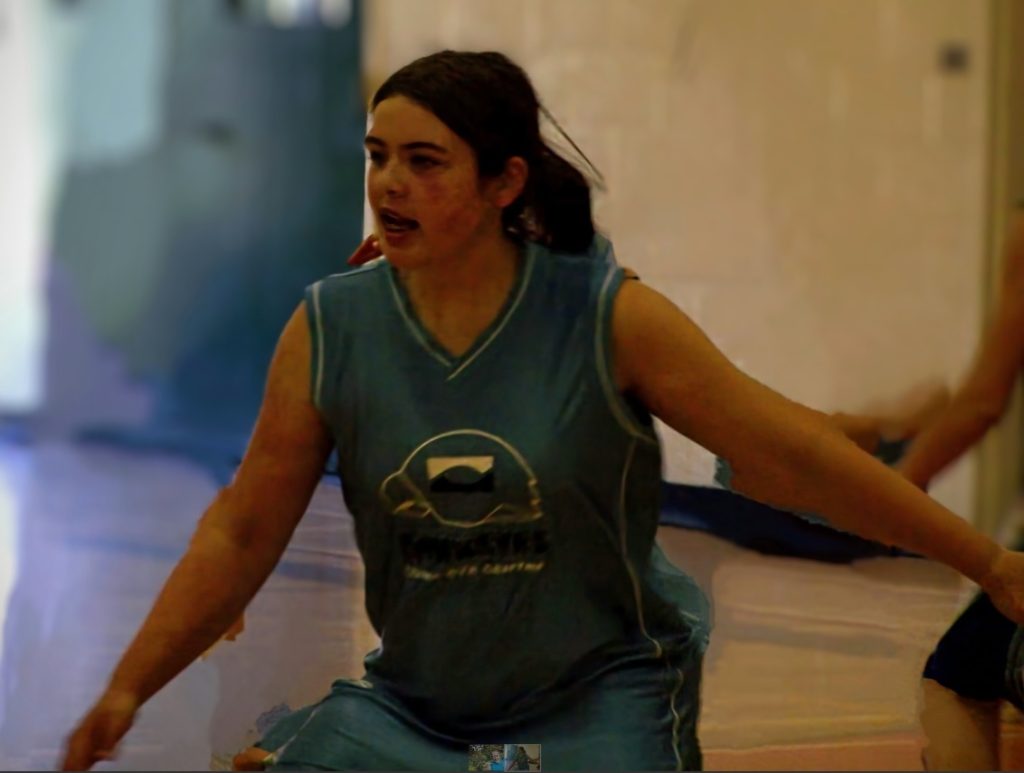
An aspect of my CMTC that I don’t discuss very often is the hypermobility in my joints, especially on my impacted side. Both sides of my body have fairly mobile joints; however, my affected side is significantly more problematic. A notable visual difference in the mobility of my sides is that, while I can touch my right thumb to my wrist, my left thumb is a couple of centimetres away. Generally speaking, the hypermobility in my joints doesn’t give me much of a challenge, but there are some scenarios where it can become problematic.
For most of my childhood, I couldn’t understand why I would have no trouble sitting on the floor, especially with legs crossed, for so long, but the moment I stood up, the pain in my hips and knees was excruciating. I know now that I was likely slightly dislocating my hip while I sat on the floor, as even now, years later and more aware of my body, I can feel my right hip sliding out of place when I sit on the ground. Now, I have spent many hours with physiotherapists to get acquainted with my body so I can feel when a joint is being pushed to the limit and slowly guide it back together before I move. I have also found that some exercises are more beneficial than others. For example, I thought yoga or Pilates would be a good option as I was so flexible, but I have learned that the flexibility in my muscles was not truly there; it was just me stretching my joints to their limit and sometimes past. For that reason, strength training became a better option. Likewise, I struggle to use a treadmill, but cardio machines, like a stair stepper or elliptical, keep joints in their standard positions.
In my experience, physiotherapy has been the best way to try to manage this aspect of my condition. Working with physiotherapists who have some experience in hypermobility is obviously the best solution, but I have found that sports therapists who have worked with torn ligaments tend to have great experience in controlling hypermobility. It is such a rewarding feeling to be able to work with your body on strengthening it safely rather than fighting your joints every step of the way. The stretching and exercises that I have been provided give me far more strength to not just exercise, but also get through some more painful days.
I have also seen orthopedic surgeons regarding a number of my joints; however, in general, there is little surgical options for this kind of condition that are available where I live. I have had a couple of scoping procedures done on both knees to try to repair some of the connective tissue tears that were getting caught in the joint. These surgeries were very successful in providing less painful mobility, but risks do exist. We struggled to make incisions through the vascular malformations, ensuring neither blood vessels nor nerves were accidentally sliced. We managed this by using a nerve monitor during the surgery; however, the added complications and risks in these surgeries have led me to use them sparingly.
Another more surprising lifestyle change I have found is working in a job that allows me to work both sitting down and standing up. I used to work an office job where I spent long hours at a desk. I found even with ergonomic set-ups and adaptations, my hypermobile and asymmetrical body just didn’t fit any of these options comfortably. However, having the flexibility to sit sometimes, stand at a desk, or walk around a bit allows for more freedom of movement, which means I can work more days without pain.
Overall, hypermobile joints are not an aspect of my condition that tends to get a lot of attention from strangers or from doctors, but they can have daily impacts. I find this aspect is less about dealing with the social or emotional aspects of my condition, but more about learning how to physically address the unique needs of my body. Obviously, every vascular malformation patient will have different impacts and challenges with their joints, or they may have none, and that’s why trying different things in a careful and controlled space, like with a physiotherapist or an exercise instructor, can be such a useful tool. Finding an exercise that makes you feel your best will help you stay with it and give you a push to keep at it.