


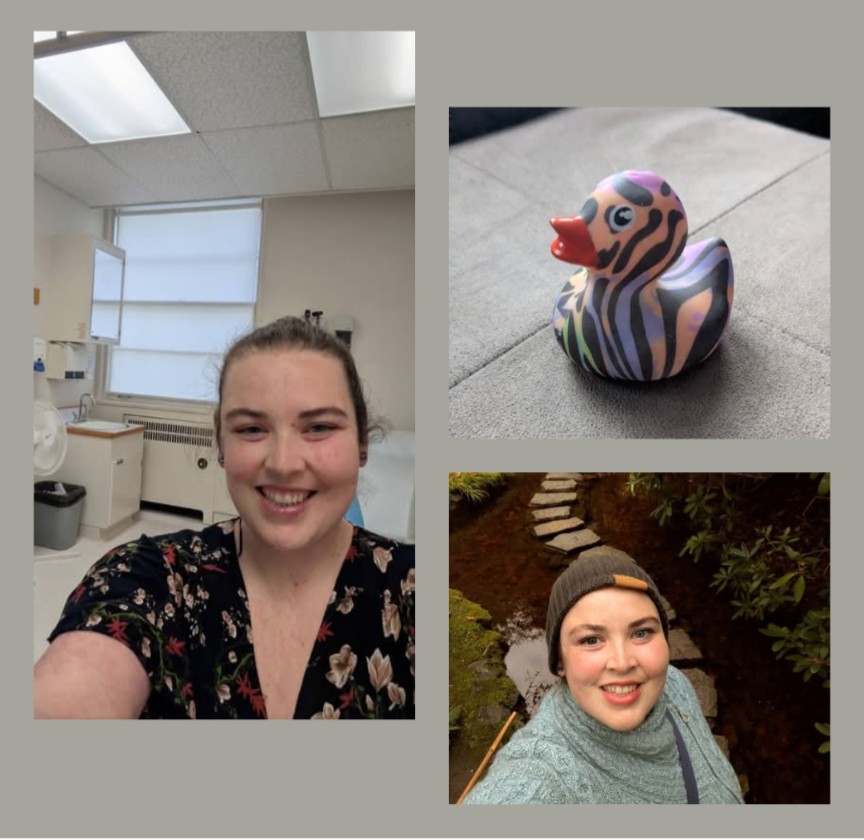
Last month, I shared the frustrating reality of advocating for yourself in the healthcare system. It is always important to acknowledge these challenges to work towards building a better future, but it is equally important to celebrate the successes. Since I recently had one of these whiplash experiences, I wanted to share the good news here as well. After the disappointing attempts to book my last round of scans, with roadblocks on every corner, which is still not booked, I got exciting news: I will finally have an appointment with one of the only vascular malformation experts in Canada. After 4 years of hard work, working around the pediatric walls of the system, I finally got to see my doctor.
It was a long road; he works in the genetic wing of the women’s and pediatric hospitals, as I was a former pediatric patient there, that hospital refused to forward my case file to him, as I was no longer a peds patient. So, my GP and I had to go back to the drawing board and apply through the women’s hospital. The problem was that most genetic appointments for women at this hospital are for pregnant women, since I am not pregnant, they were reluctant to forward my file, though they conceded that, as a woman who can get pregnant, that was a possible route. Finally, we applied again directly to him and the provincial medical genetics departments. So, a year after we submitted the request, we found out I was finally on the list, now to hurry up and wait. By a stroke of pure luck, a cancellation happened 18 months after I was put on the list, and I was off to Vancouver only 2 weeks after my failed attempts to make the scan appointments.
This was probably the best appointment I had had since leaving pediatric care. I don’t say that lightly. I have had some amazing doctors, who have provided incredible care and saved my life, but to meet with a doctor who knew about my condition, had read my file, and had followed up on things to ask questions about before the appointment. I just felt seen like a real patient, not just a piece of the medical puzzle. We were able to start talking about CMTC and its impacts right away. There was no need to spend over half the appointment describing my condition, defining it, and letting them Google it, watch them realize how little information there really is, then start from the beginning anyway. We just were able to get to business. I was able to ask questions and not get all the answers, but I definitely got real advice I had not heard before. It was wonderful. The length of the appointment definitely helped with that feeling; we had 2 hours to discuss my concerns and needs, what options exist in Canada for treatment, and to do a full body exam.
Overall, it was an appointment that renewed some of my faith in our medical system. That is not to say it was a perfect story or ending. One challenge I have faced with these kinds of appointments, both in pediatrics and this last one, is the need to temper that rising hope, that this doctor or this team will have all the answers. I know logically that no one has all the answers to CMTC; we are a rare bunch! However, that doesn’t mean it is easy to remember that when you finally get to meet someone who knows about your condition. Also, having had the opportunity to spend time in the European medical community, it is always hard to hear that approved treatments and options in Europe are not available in Canada. These types of appointments, where you have such a wealth of knowledge, are truly a gift for anyone in the rare disease community; however, it is always important to temper those feelings of excitement with the understanding that no one in this life has a magic 8-ball that can answer every question or solve every complication of your rare disease. Sometimes we just have to live it.